
When I say coffee and cocktails, you probably think of the Espresso Martini and variations thereof.
If you are a more seasoned bartender, you might also think of the Black Russian, the White Russian, or even The Dude from the Big Lebowski drinking them.
But I'm about to argue that coffee has far more potential than just these few well known drinks. And to understand why, we must first begin by understanding coffee a little better.
A Humble & Bitter Cherry Seed
Despite our day to day language calling it a coffee "bean", the thing we like to roast, grind and brew into a delicious hot caffeinated morning liquid, is actually a seed.
More specifically, it's the seed of the "Coffea" plant with almost all coffee in the world coming from one of two species. Coffea arabica and Coffea canephora with the latter often just called Robusta coffee.
To make things more confusing, the fruit of the plant is often called a coffee cherry, despite strictly speaking not being a cherry. A cherry has a single seed inside it, while the Coffea plant has two seeds that sit next to each other with a flat side together. You can easily see this flat side on most of your coffee beans!
But why does it matter that coffee is neither a bean nor a true cherry?
By better understanding our ingredients, we can better get creative when making up new drinks. I've written about my concept of Creative Zoom before, and this is another great example of it.
If we think of "coffee" as just "coffee", we are restricted by the naming and label to the patterns we already know. If we zoom in a bit and instead ask, "what actually is coffee?", we can gain insight and possibly find more opportunities for creativity.
We know that coffee is not a bean. This is obvious once we think about it, because beans are starchy legumes and rarely used in drinks. Instead, coffee is a seed.
In general, seeds are oily, seeds are aromatic and seeds are bitter.
If we then focus on the fact that coffee is a bitter and aromatic ingredient, we can open up for the entire range of "cocktails" (The drink's family that is spirit, sugar & bitter) under the umbrella of the classic Old Fashioned and Martini.
Or we can make it a supporting ingredient to balance alongside citrus in the Sour family of drinks. (Spirit, sugar & citrus).
New Coffee Cocktails & Modern Classics
Last month I had the honour of developing drinks, and tending bar, at the opening of Lavazza's new coffee training centre in Copenhagen.
The brief for the drinks were simple, but with enough constraint to get really creative in crafting something replicable and truly modern. As long as the drinks weren't just Espresso Martini twists, I was golden.
Before diving into these drinks, it's worth looking at the creative inspiration behind them.
Both traditional coffee houses and modern cocktail bars have a big thing in common. They both offer a social space to meet, socialise and discuss ideas.
"What is being said at Caffè Fiorio?"
One of the oldest coffee houses in Turin was a place called Caffè Fiorio. The story goes that the king of Sicily would begin every morning by asking his staff "What is being said at Caffè Fiorio?" as a way to stay on top of local news, mood and any potential political uprisings.
The Caffè was a hot spot for young as well as older people to meet, drink coffee and discuss all ideas small and large.
Inspired by this story, I came up with a simple and easy to recreate twist on the Americano cocktail. For context, the original Americano uses Campari, vermouth & soda water. Essentially a long classic cocktail.
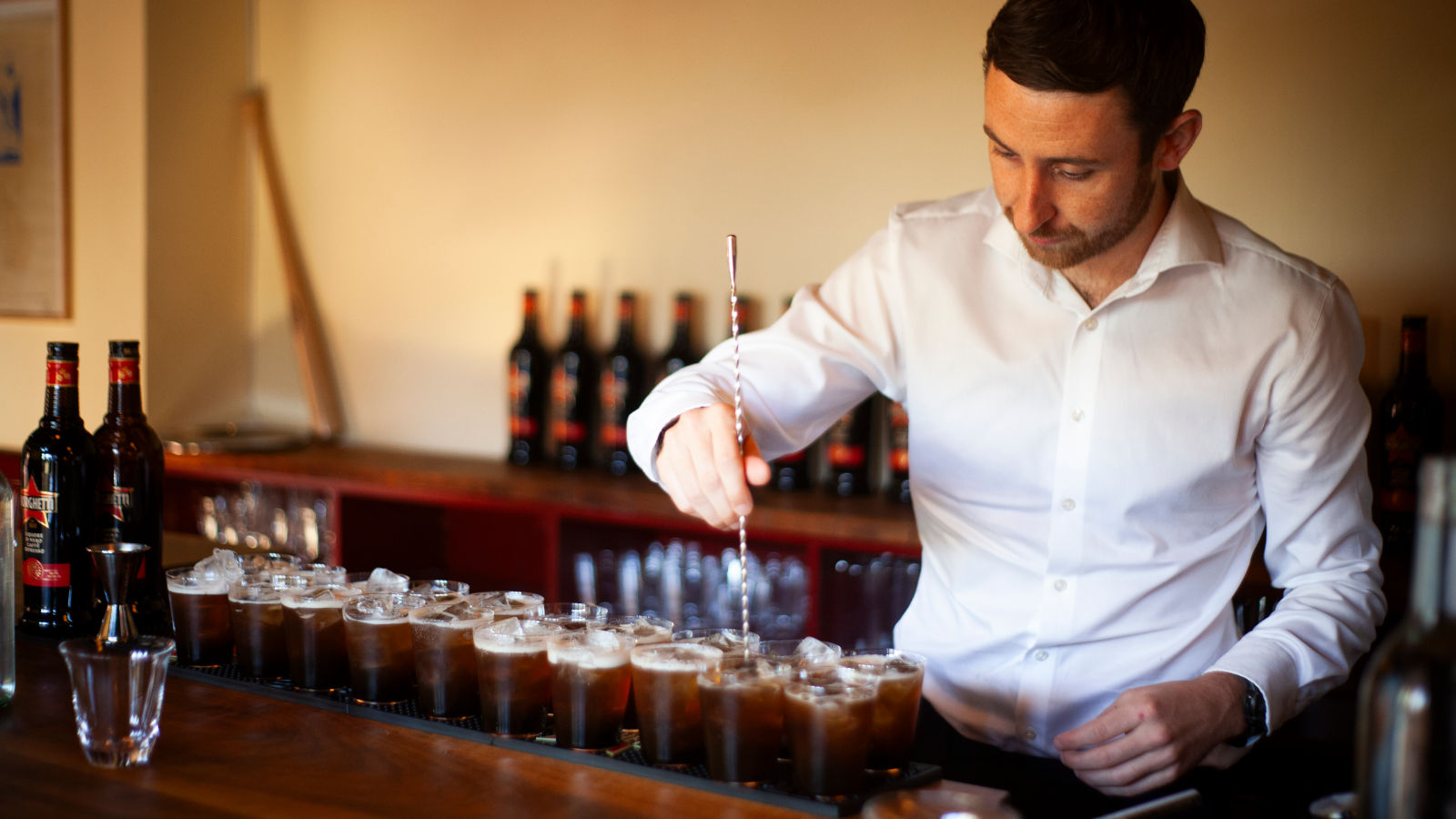
For my twist, the base remains the same, but the Campari and vermouth was blended in advance and infused with whole Lavazza coffee beans for 18 hours at room temperature.
Lavazza Aperitivo Blend
Prep ingredients
- 700 g Campari
- 700 g Dolin Rouge
- 140 g Coffee Beans
Yield
700 ml
Instructions
Combine and leave to infuse for 18 hours at room temperature. Strain off coffee beans and bottle
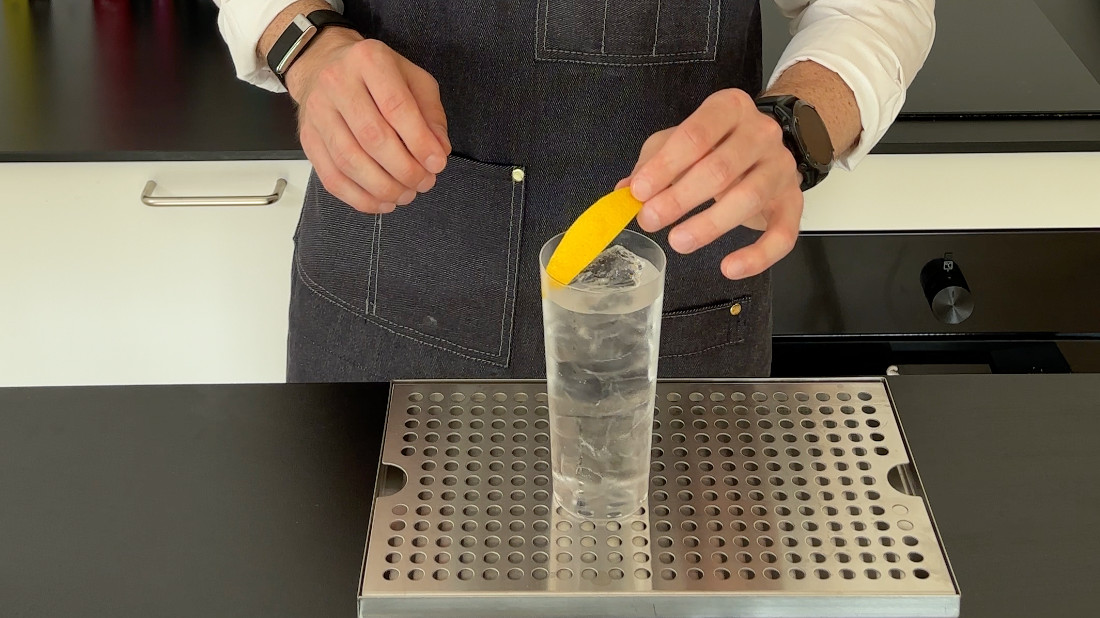
Once that "aperitivo blend" was done, it's a simple case of building the drink and topping with tonic in place of soda water. The garnish is an orange twist to get the aromatic oils as a refreshing welcome to the nose.
Café Torino
Ingredients
- 50 ml Lavazza Aperitivo Blend
- 100 ml Fever Tree Tonic
Garnish
- Orange Twist
- Glass
- Highball
- Method
- Build
- Ice
- Cubed
The Art of Blending
Combining one or more bitter liqueurs - such as Campari, with one or more vermouths into a house "MiTo" blend - is something more and more bars have started doing.
MiTo here is short for Milano Torino which is the classic cocktail combining those two exact ingredients:
Milano Torino
Ingredients
- 30 ml Campari
- 30 ml Sweet Vermouth
Garnish
- Orange Slice
- Glass
- Rocks
- Method
- Build
- Ice
- Cubed
This MiTo blend can then be re-used across many of the classic drinks like the Negroni or Boulevardier for a unique house-specific flavour.
In the mid 1800s, a lot of good things happened to cocktails and the drinking scene.
One of the exciting things was a legal change in Scotland that allowed for blended whiskys to become big in the 1860s. By taking a variety of whiskys and combining them in perfect harmony, blenders could create new products that were often much more well liked by the drinking public.
At the end of the century, a similar trend had started in coffees with Luigi Lavazza leading the pack in Turin. By combining high quality coffees from multiple high quality sources, the first coffee blends were made available to the wider public and coffee really started taking off.
Inspired by these revolutionary blenders, I came up with a punch style drink that reads almost like a sour, but flips the coffee & citrus volumes around for a unique and simple modern classic:
Blender’s Punch
Ingredients
- 10 ml Lemon Juice
- 20 ml Acacia Honey Syrup
- 20 ml Lavazza Tierra Colombia Cold Brew
- 50 ml Johnnie Walker Black Label
Garnish
- No Garnish
- Glass
- Rocks
- Method
- Shake & Strain
- Ice
- Block
The Blender's Punch uses a simple 2:1 acacia honey syrup for sweetness and a concentrated 4:1 cold brew for depth, aroma and light bitterness to balance.
Acacia Honey Syrup
Prep ingredients
- 200 g Acacia Honey
- 100 g Simple Syrup
Yield
300 ml
Instructions
Mix together till fully combined
Lavazza Tierra Colombia Cold Brew
Prep ingredients
- 1000 g Water
- 250 g Lavazza Tierra Columbia Ground Coffee
Yield
1000 ml
Instructions
Combine, stir and leave to infuse for 24h. Coffee filter
This template of using coffee as primary bittering with a small support from citrus is something I suspect could work as an interesting foundation for more modern drinks!
Funky Rums and Funky Cherries
When researching for these coffee drinks, I naturally read up on the history and production methods of coffee. How do you go from a fresh coffee cherry to a finished coffee brew?
The first step in this long process is picking the cherries and drying the seeds (the beans). There are two primary methods for doing this, with a few minor variations in between.
It can be done mechanically, meaning a machine washes the flesh and pectin off the seed before drying, or it can be done the "natural" way which means leaving the fruit in the sun to naturally dry around the seed before separating.
If done naturally, the resulting coffee is said to become much more fruity with more tropical notes. If you know about rum production, this makes a lot of sense as it's the exact same wild fermentation that causes the funk.
In both funky rums and funky coffee cherries, we see fruity esters develop as a result of longer wild fermentation.
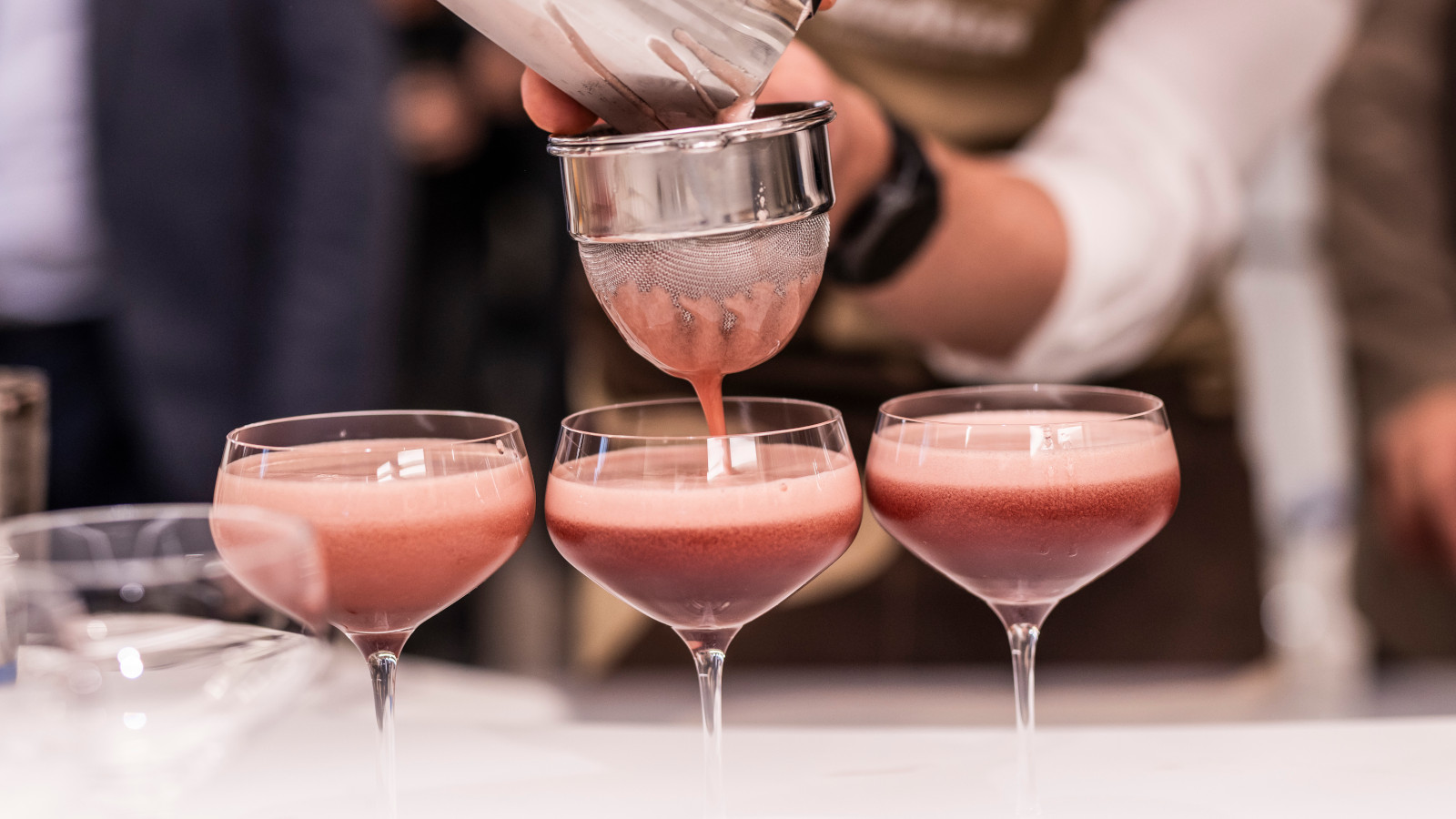
It's this production method that inspired my third modern coffee drink simply called "Funky Cherry":
Funky Cherry
Ingredients
- 3 Raspberries
- 10 ml Great Dane White Rum
- 20 ml Frederiksdal Vintage Cherry Wine
- 20 ml Grenache Red Wine
- 20 ml Lime Juice
- 25 ml Lavazza Tierra Colombia Cold Brew
- 25 ml Simple Syrup
Garnish
- No Garnish
- Glass
- Coupette
- Method
- Shake & Fine Strain
- Ice
- No Ice
This is an extremely chinnable, low ABV cocktail using a blend of Danish cherry wine & grenache red wine as the base with a funky rum and fresh raspberries to support the cold brew coffee.
Taking Coffee Further
Coffee cocktails can be, and should be, much more than just the Espresso Martini.
There is no doubting the original Espresso Martini is an exceptional drink, but coffee has so much more potential as an aromatic and elegantly bitter component in drinks.
Whether you're using it as a foundational bitter ingredient in the drink or just as an aromatic addition, I'd love to see more coffee drinks being developed. As a start, you're welcome to steal one of my recipes above.
You can share them with your friends directly via the web link on each, or you can download Peche and copy them directly in-app to make your own twists.
Cheers!