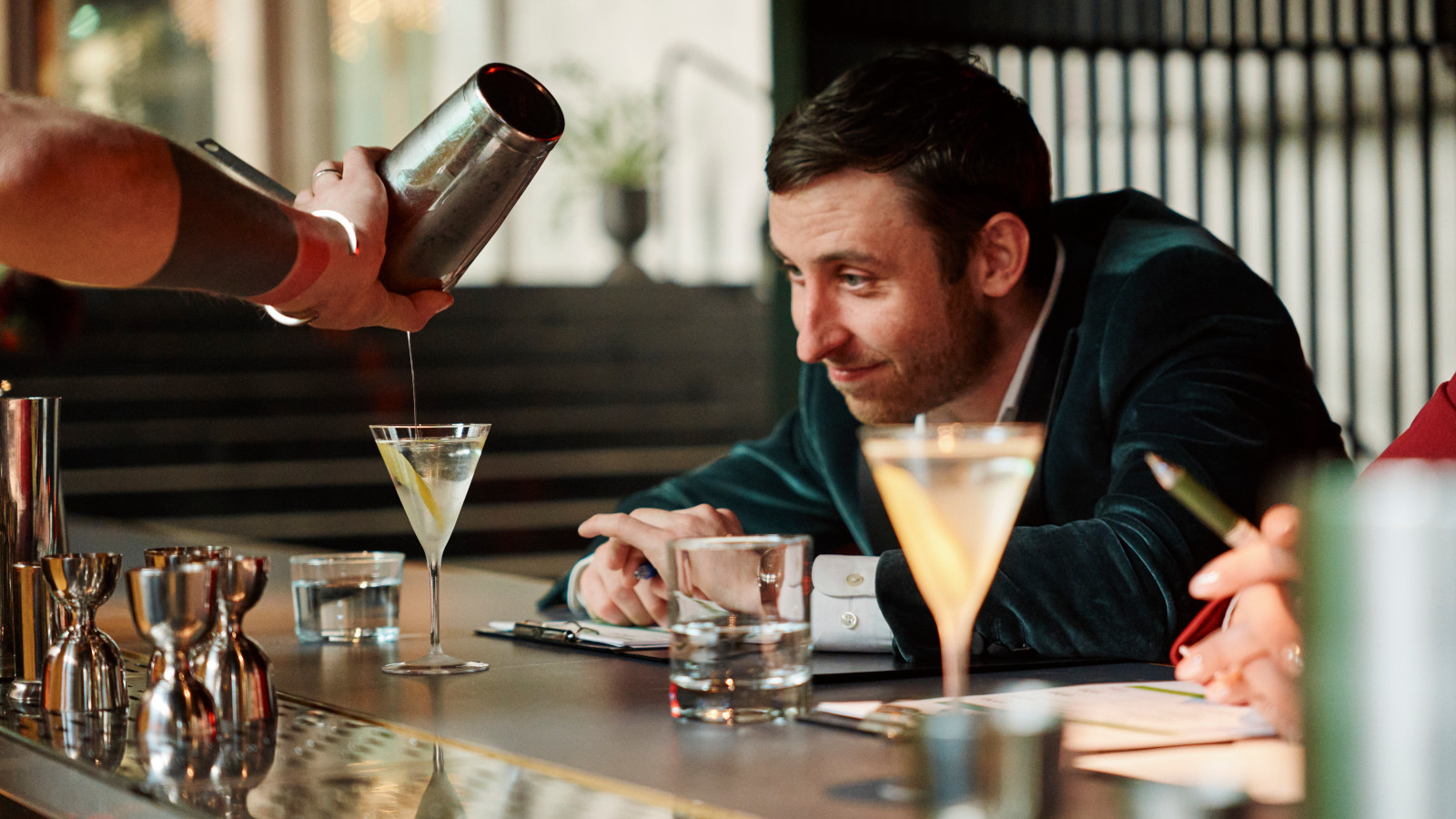

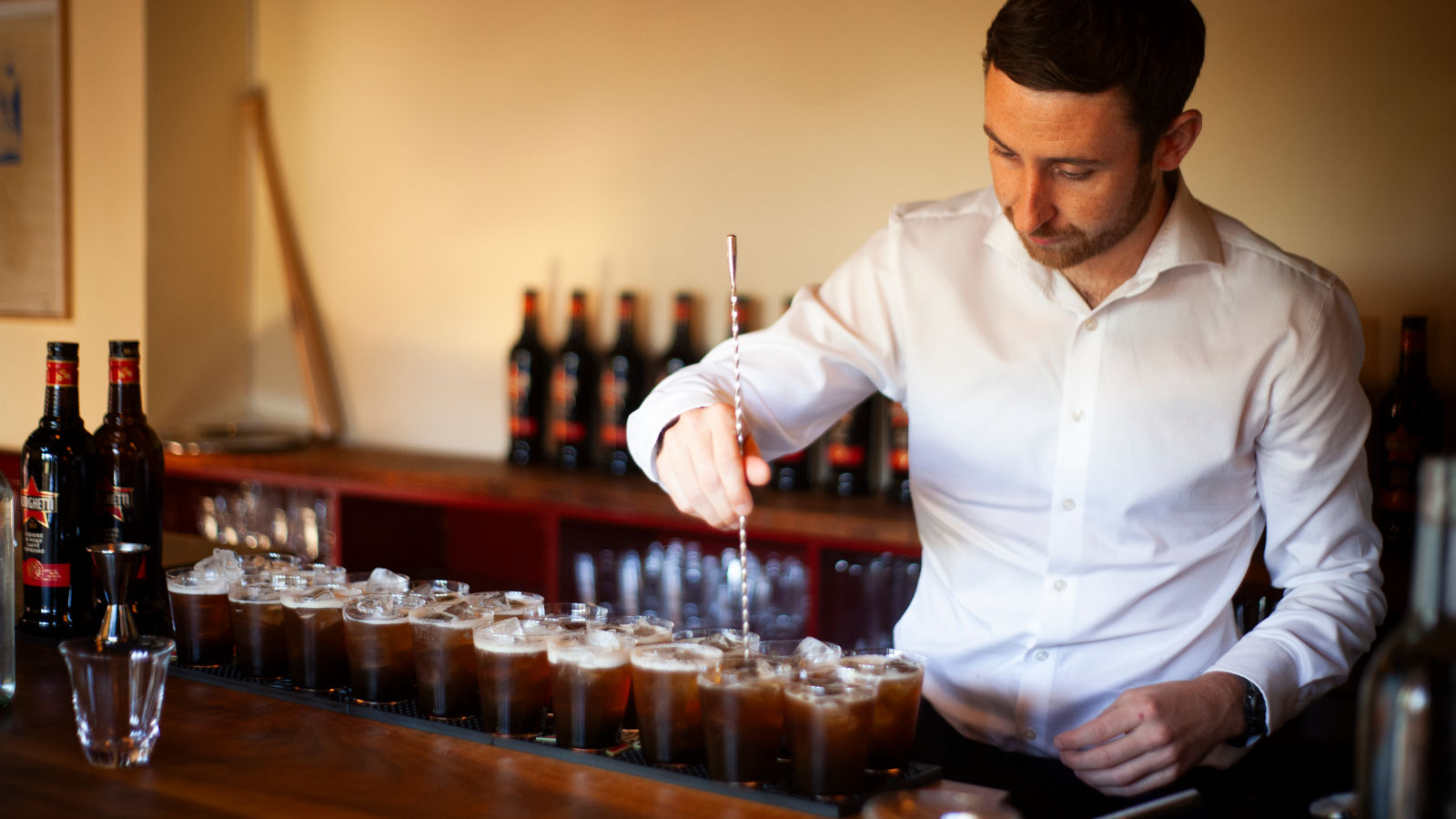
The other week I had the honour of judging the Danish finals of Borghetti Caffè's Espresso Martini competition and rarely does a competition have every drink being as genuinely delicious as this one.
A competition revolving around a single known classic is fun because it challenges creativity within strict boundaries. Although we believe we want complete freedom when it comes to creativity, often true originality happens when we work with clear constrains.
Riffs on the major classics like the Old Fashioned, the Daiquiri and the Margarita are often the most popular. Of course this is partly due to our guests recognising the now famous names, but more importantly it's because it's significantly easier to come up with a creative, modern and delicious twist when the boundaries are clearly defined.
You might define a drink as a clean sour, a classic bitter cocktail or a fresh daisy where a homemade cordial takes the place of the sweet liqueur while complementing the citrus.
Regardless of your preference among these, the key to better competition drinks is ultimately better defined challenges!
Defining Challenges for Modern Classics
There are many modern classics spanning the Paper Plane, the Penicillin and slightly older drinks such as the Espresso Martini or Cosmopolitan, but few are as simple and globally replicable as the Gin Basil Smash.
In a recent episode of Tristan Stephenson's podcast, The Curious Bartender, Jörg Meyer talks about creating original drinks when he first opened his bar in Hamburg. Jörg explained that no one really cared and you can't control what gets popular, so despite all the creativity of the house originals, it didn't gain traction until one day he "...put fucking basil in a gin sour and the world is freaking out...".
While I absolutely love the modesty of his statement and I can see why the drink can be considered just "fucking basil in a gin sour", the truth is a bit more nuanced, whether Jörg wants to admit it or not.
A great sign of truly creative people is how rarely they acknowledge their own originality. With a deep understanding of one's field comes a deep understanding of what's been done before. And if you understand what's come before, you are less inclined to consider your own contributions as more than just a minor twist, because you know exactly where the inspiration came from.
My counter argument here is that working with basil in a professional environment, where consistency and freshness is key, is everything but easy! Oxidation, browning and loss of flavour are real threats when working with fresh herbs. If you aren't sure of how difficult this can be, check out this recent Proof article on how to avoid browning in herbs without losing fresh flavour.
Although I can't speak about the original spec for the Gin Basil Smash, nor do I know how Jörg and his team prepare the drink, I did visit his bar Le Lion in Hamburg and can honestly say it's the greenest and freshest sour I've had in years. It's a true original crafted within clear boundaries of a gin sour with perfect understanding of the ingredients behind it.
But what does this have to do with competitions, and how does an Espresso Martini fit into it?
If we take a trip back in time to the early 1980s London, we see a similar story for creating the drink we now recognise as the Espresso Martini. Before the drink received it's now famous name based on it's fancy glass, it was served on the rocks and known as a Pharmaceutical Stimulant. And before that it was called simply a Vodka Espresso.
I think it's safe to say that Dick Bradsell knew his craft very well. He was a master at expertly using new ingredients and most of his original classics were created with references to other drinks that came before.
The Bramble was based on a spec for the Singapore Sling, the Treacle was a clean twist on a Rum Old Fashioned and the Vodka Espresso was a ratio inspired by the Brandy Alexander as a template. The insight here is that innovation requires inspiration!
If we are planning competitions, we can learn from this by making clear challenge descriptions that avoid popular buzzword jargon such as "modern originals", "sustainability" and "innovative technique".
Although pushing the industry forward through continued learning and a bigger focus on sustainability is important, these are terrible ways to define competitions for aspiring bartenders.
Instead we should clearly define a framework for creativity that focuses on a single primary topic, such as a single ingredient, a flavour combination, a famous dish or even just a classic cocktail, such as the Espresso Martini.
Making Bartenders Care
Beyond the 15 minutes of fame for the winner, there is usually very little reward given to bartenders when it comes to competitions. Even the minor glory for the winner often evaporates once the post-competition celebrations are over and everyone moves on to the next big thing.
This is clearly a problem of inspiration, so how do we fix this?
I believe there are two key opportunities to consider here for the brand and it begins with the above mentioned idea of better defined challenges.
Of course, not everyone can actually win the competition, but everyone who takes time out of their day to attend the event has an opportunity to be taught something useful. A lot of brands has genuinely cool back stories and there's a lot of opportunity in sharing the theory and methods behind the production without it necessarily becoming boring.
I didn't realise that Borghetti Caffè is the oldest coffee liqueur going back to the 1860s and it was genuinely founded on coffee innovation from the founder, along with a relatively straight forward alcoholic maceration, filtration and addition of sugars. Apart from the custom made 500+ litre coffee "pot", there's little more to it apart from a few preferences at each of the steps.
That's a fantastic baseline for a small piece of bartender education!
By explaining these underlying principles of flavour extraction, liqueur making and working with quality ingredients, brands can build up excellent goodwill with the bartenders and also set the baseline for an excellent competition!
Because of this production method of the Borghetti Caffè, multiple bartenders opted for not using espresso at all in their twists because of the higher alcohol and lower sugar content compared to other liqueurs. Personally, I think that's super cool.
The second big thing competitions fail to capitalise on is the longevity. It's obviously not cheap for a brand to organise a competition so it's a shame that most competition drinks are left to die.
As much as we admire the bigger name competitions like World Class, Campari Red Hands or the old Bacardi Legacy, I'm willing to bet that you can't name a single drink from more than maybe one or two winners of the past, if any at all. You probably can't even name any of the competitors or winners apart from who might be competing right now...
I think that's a genuine shame as there's clearly some excellent creative minds out there who put a lot of thought and hard work into crafting competition entries.
For the Espresso Martini competition, Peche has set up a public page for Borghetti Caffè with detailed recipes of the Top 4 cocktails along with ALL of their prep ingredients and I think you should go check them out!
The winning drink has the delightful punny name "Espress Yourself" which is firstly excellent because it actively removes the X in the often wrongly pronounced "Expresso" and it's also damn delicious and quite straight forward to recreate.
Espress Yourself
Ingredients
- 1.5 cl Vanilla Syrup
- 2 cl Espresso
- 3 cl Borghetti Caffé
- 6 cl Cacao Infused Tequila
Garnish
- Cacao powder
- Glass
- Coupette
- Method
- Shake & Strain
- Ice
- No Ice
If you're curious, you can find the other Top 4 drinks and prep on the Borghetti profile here along with my low ABV lunch drink "The Alarm Clock", inspired by the cool backstory of Borghetti Caffè.
Each of these drinks are original and created by bartenders who care. Try recreating one or two of them behind your own bar and let's keep sharing inspiration for a brighter industry future.
Cheers!